
Filters





High-Quality Men's Sweatshirts: Substance, Craftsmanship, and Heavyweight Qualities
A sweatshirt is not a fashionable disposable item, but a textile tool. Originally designed as purely functional sportswear in the first half of the 20th century, intended to absorb the sweat of American athletes, the sweatshirt has developed into a cornerstone of the discerning men's wardrobe. But there are worlds between the industrial mass-produced goods of fast-fashion companies and the high-end productions of specialized manufacturers.
In our cosmos, it's not about short-lived trends, but about textile technology, historical authenticity, uncompromising fabric weights, and traditional weaving processes. Anyone who has experienced the feel of an indestructible 25.8oz sweatshirt or understands the springy structure of a loopwheel sweater made on centuries-old circular knitting machines sees clothing with different eyes.

Fabric Weight and Handfeel: The Difference Is in the Ounces
The decisive characteristic that defines the quality and character of a sweatshirt is its fabric weight. This is traditionally measured in ounces per square yard (oz/yd²). While conventional, standard sweatshirts from department stores rarely weigh more than 8 to 10oz and lose their structure after a few washes, the world of premium sportswear begins where others end.
The Heavyweight Segment (12oz to 18oz)
This range encompasses classic, heavy essentials. Brands like The Real McCoy’s, Buzz Rickson’s, Jackman, and Whitesville set the standard here. A fabric weight of 14oz immediately feels substantial. The dense weave ensures that the material possesses a natural stiffness. It drapes cleanly on the body, doesn't wrinkle, and conceals the silhouette in a masculine, striking way. Due to the high density of the cotton, such a sweater offers noticeable wind resistance. In the transitional months of spring or autumn, this fabric thickness often makes an additional jacket completely superfluous.
The Ultra Heavyweight Extreme (21oz to 25.8oz)
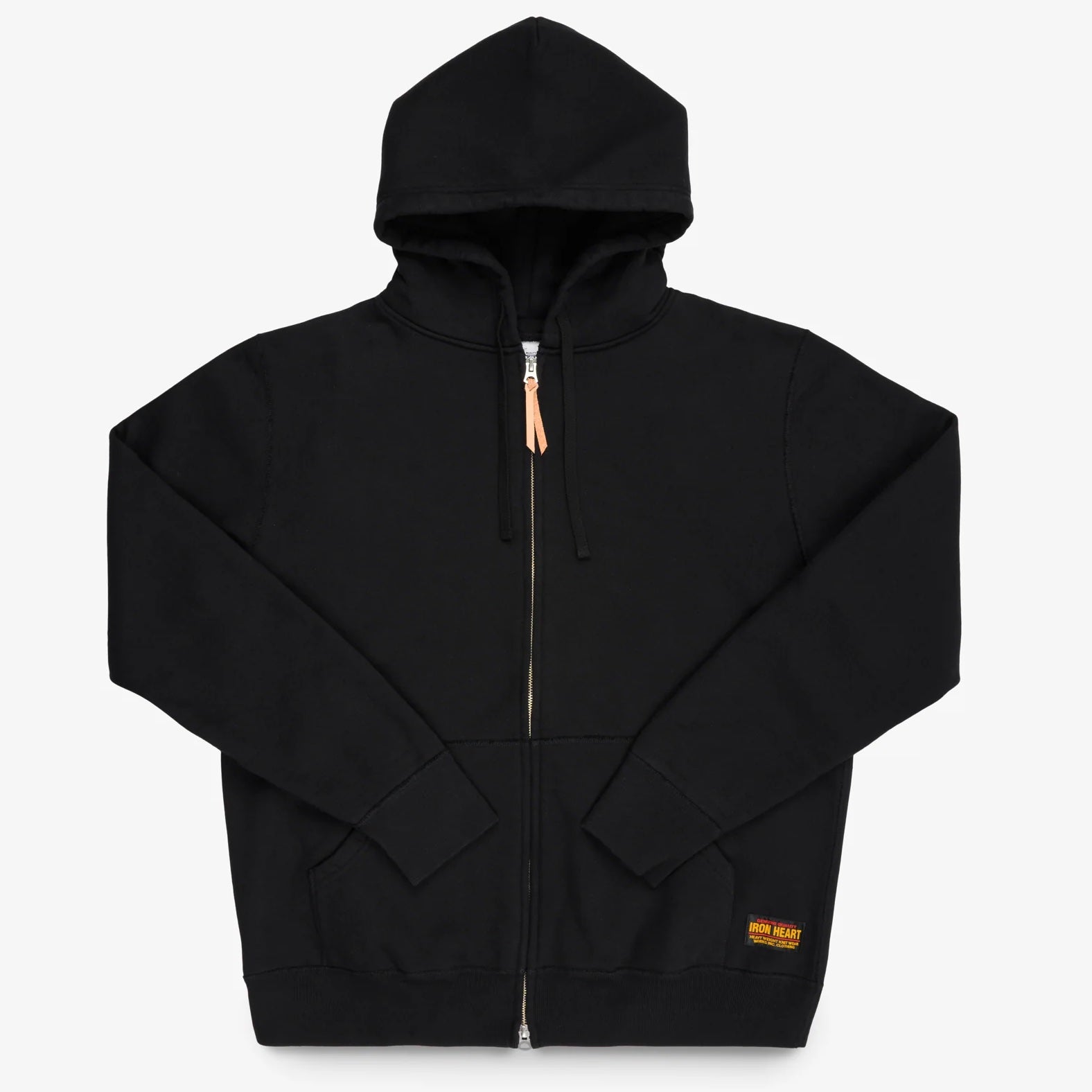
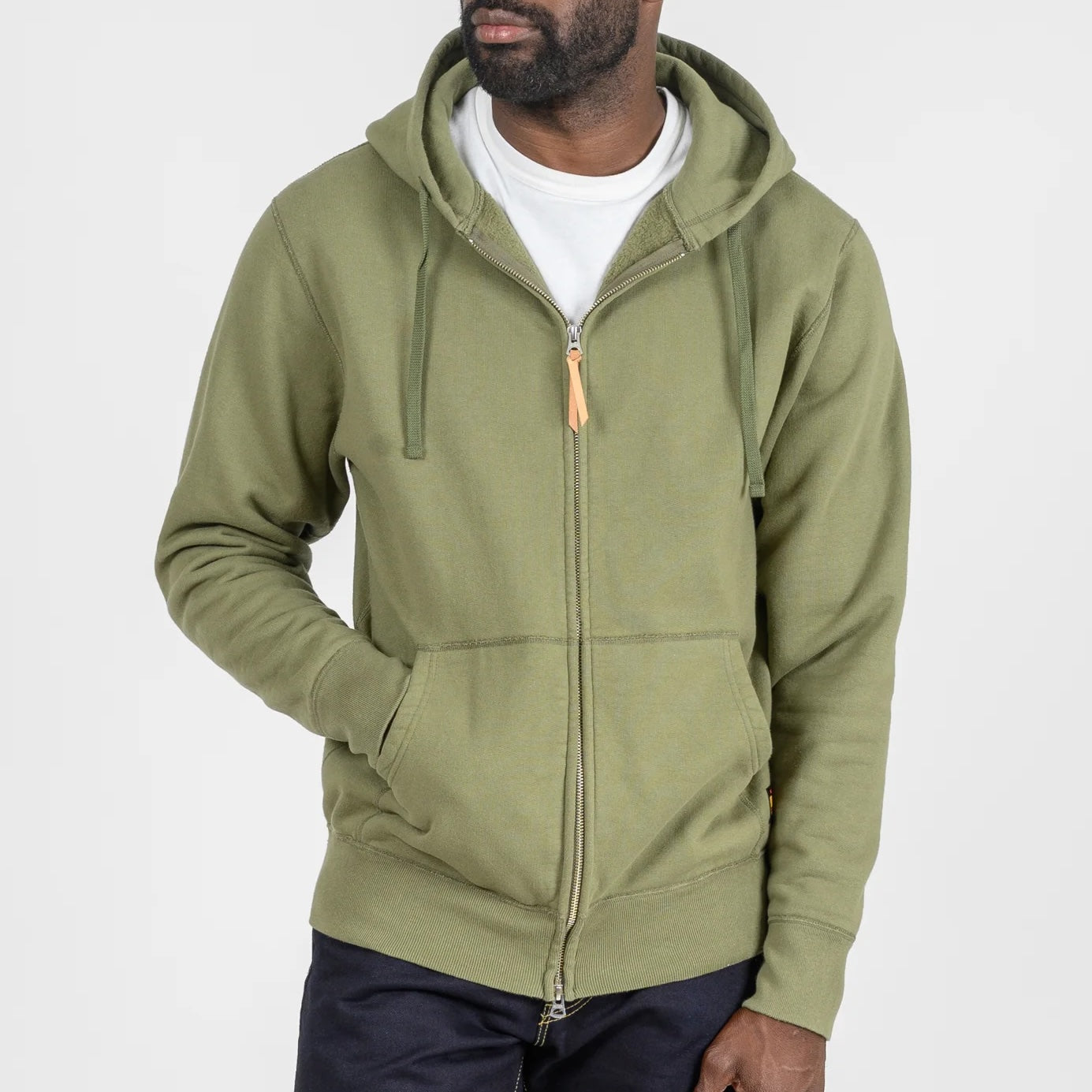
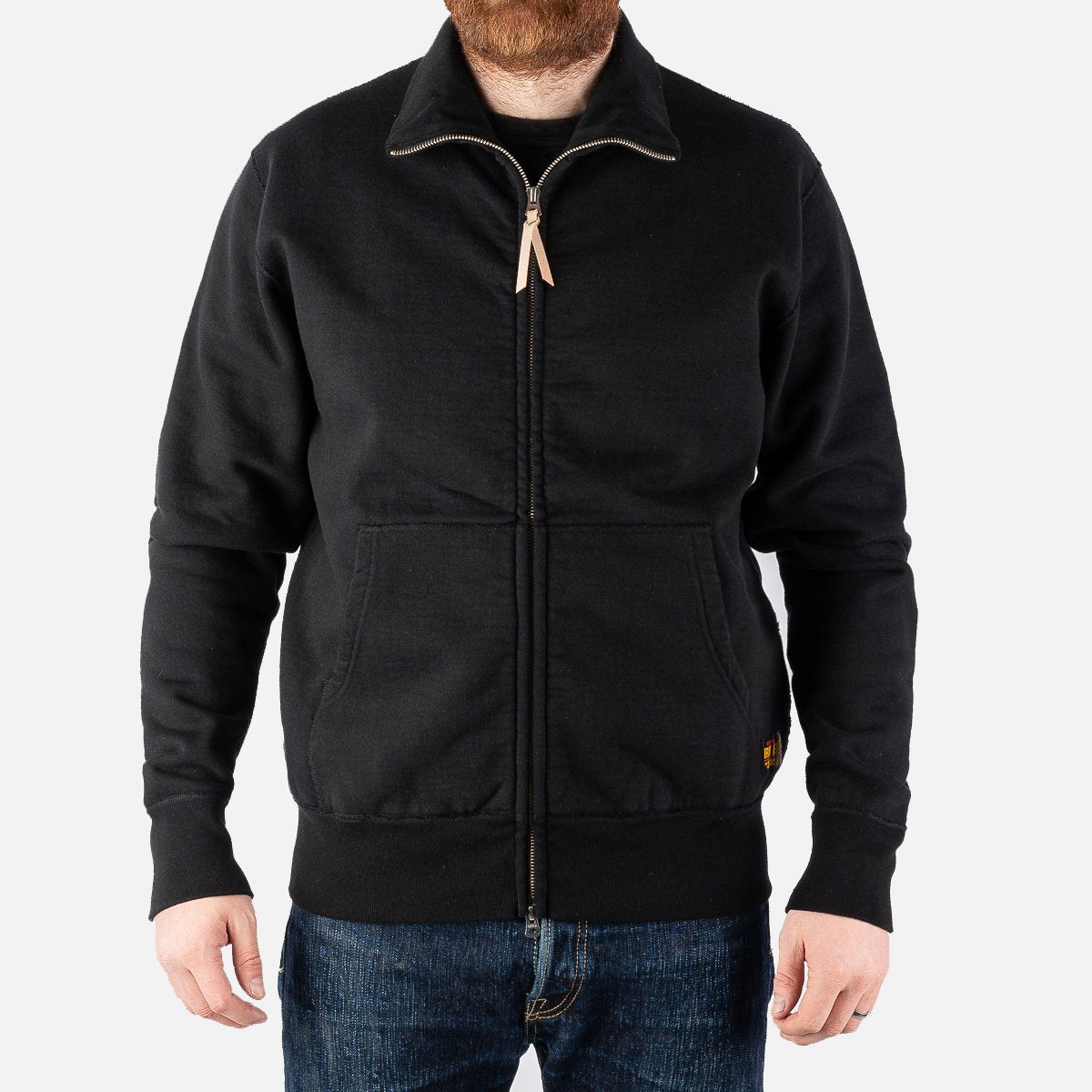
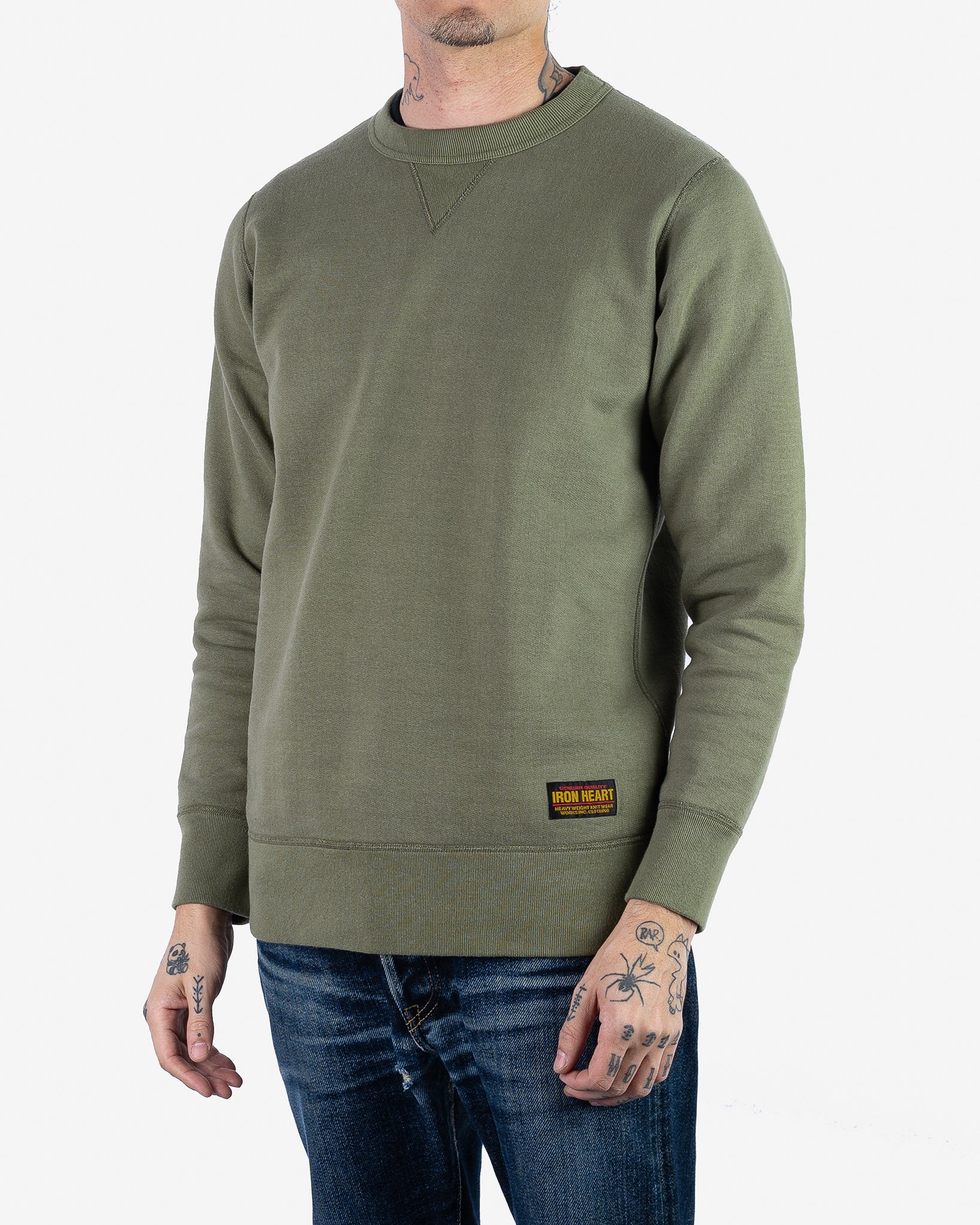
At the pinnacle of textile possibilities is the brand Iron Heart. Famous for their uncompromising selvedge jeans, the Japanese apply the same philosophy to their knitwear. A sweatshirt or hoodie with an extreme maximum weight of 25.8oz is reverently referred to as a tank by the community. This material is so densely pressed and massive that the sweater almost stands up by itself when placed down.
Why choose such an extreme weight?
- Wind resistance: The extremely tight weave almost completely blocks cold air currents.
- Durability: A 25.8oz fabric is virtually indestructible mechanically. Friction, everyday wear and tear, or workshop use leave no marks.
- Thermal performance: In combination with a deeply brushed fleece interior, the material stores an enormous volume of air, which acts as an insulating layer against cold.
- Shape retention: Where thin fabrics stretch out and form permanent bulges at the elbows, the ultra-heavyweight material springs back to its original shape after use.

The traditional Loopwheel process
The brands Warehouse & Co. and The Real McCoy’s are the undisputed masters of historical reproduction. They use the loopwheel process for their textiles. Here, the fabric is knitted on historical circular knitting machines (the so-called Tsuri-ami machines), most of which date from the 1920s to the 1960s. Worldwide, almost all functional machines of this type only exist in the Japanese prefecture of Wakayama. The clever thing about this technology: The machines work extremely slowly. A machine only produces enough fabric for about one meter of textile per hour. Since the knitting process takes place with almost no mechanical tension on the cotton threads, the natural elasticity and softness of the fiber are completely preserved. The result is a unique, irregular texture with an inimitable, almost three-dimensional feel (slubby texture). A decisive feature of this method is the Tubular Knit construction. The body of the sweatshirt is knitted as a seamless tube directly from the machine. There are no side seams. This has a huge textile advantage: Since there are no lateral connecting seams that are under different tension, the sweatshirt does not twist when washed. The notorious effect, where the side seam suddenly runs diagonally across the stomach after three washes, is technically impossible here.
Innovative Textures: Wonder Looper
The brand Wonder Looper holds a special position. It combines traditional circular knitting expertise with modern, extreme yarns. Wonder Looper experiments with unique blends and extremely thick loopwheel qualities that have extreme density without losing the characteristic, lively surface structure. Here, the slowness of old machines meets the desire for maximum mass.
Compact Density: Iron Heart
In direct contrast to this is the construction of the Ultra Heavyweight models from Iron Heart. Due to their sheer thickness and mass, these fabrics cannot be produced on old loopwheel machines. The threads would simply bend the fine needles. Here, modern, modified looms are used to weave the yarn extremely tightly with maximum pressure. The result is not a soft, stretchy knit, but an extremely compact, heavy fabric that guarantees maximum robustness. While a loopwheel sweater from Warehouse & Co. impresses with its airiness and comfort, the Iron Heart sweater is defined by maximum strength and mechanical resistance.
Basic and Graphic Sweatshirts
Our range clearly distinguishes between two aesthetic directions:
- Basics: Single-color models in classic mélange tones (Heather Grey), deep black, navy, or off-white. These pieces thrive purely on their texture, cut, and feel. They are perfect for sophisticated layering outfits, for example, under a rugged denim jacket, a leather jacket, or even a classic coat.
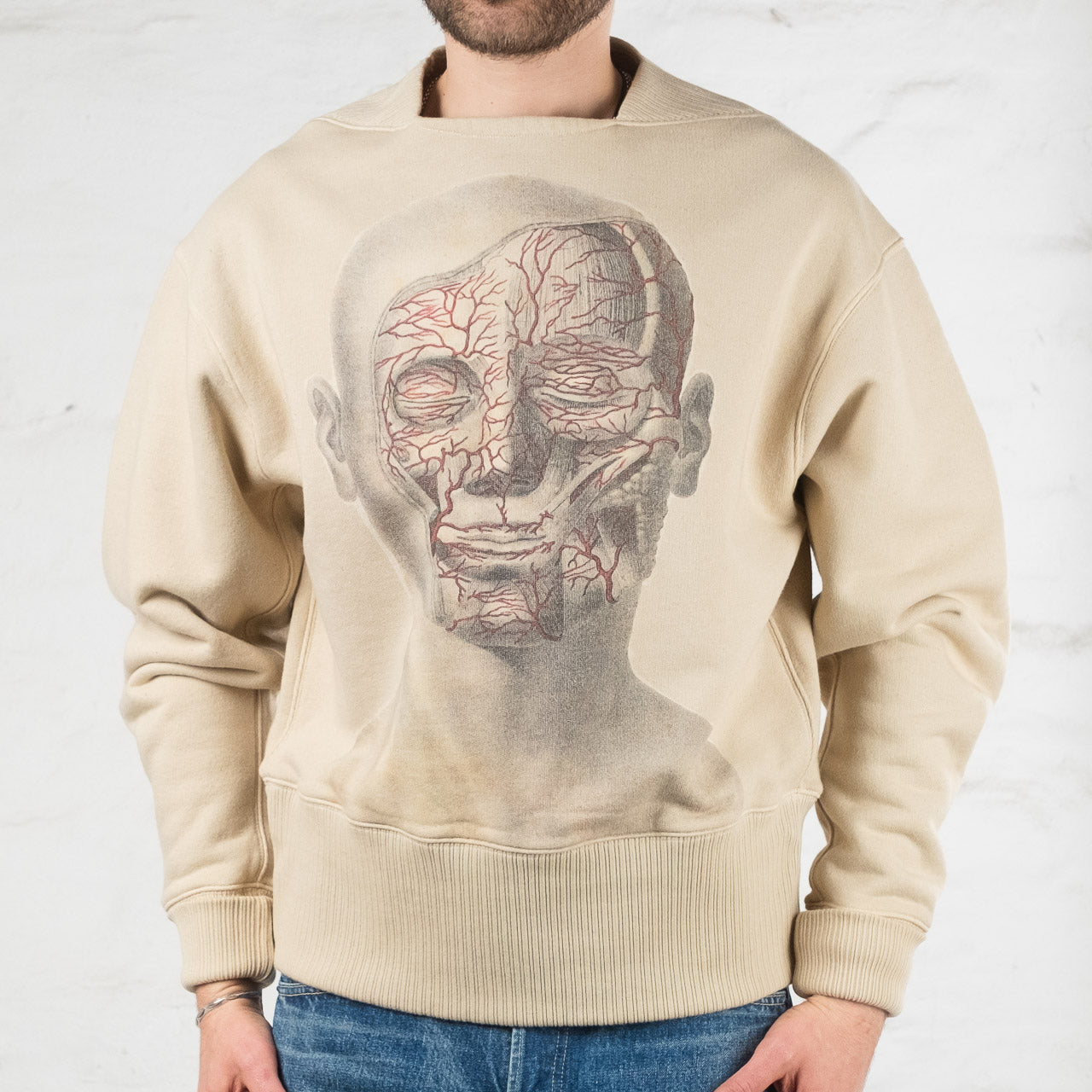
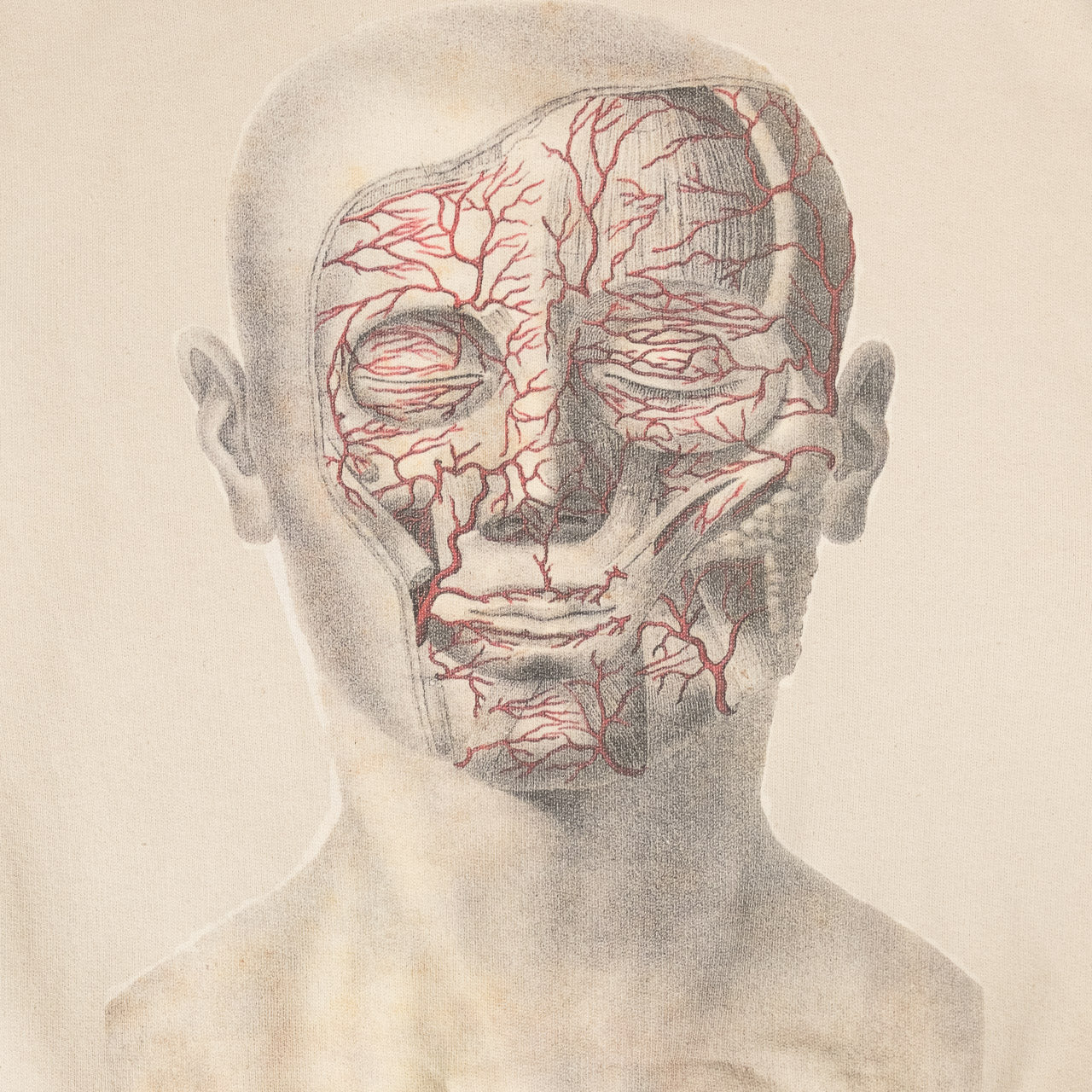
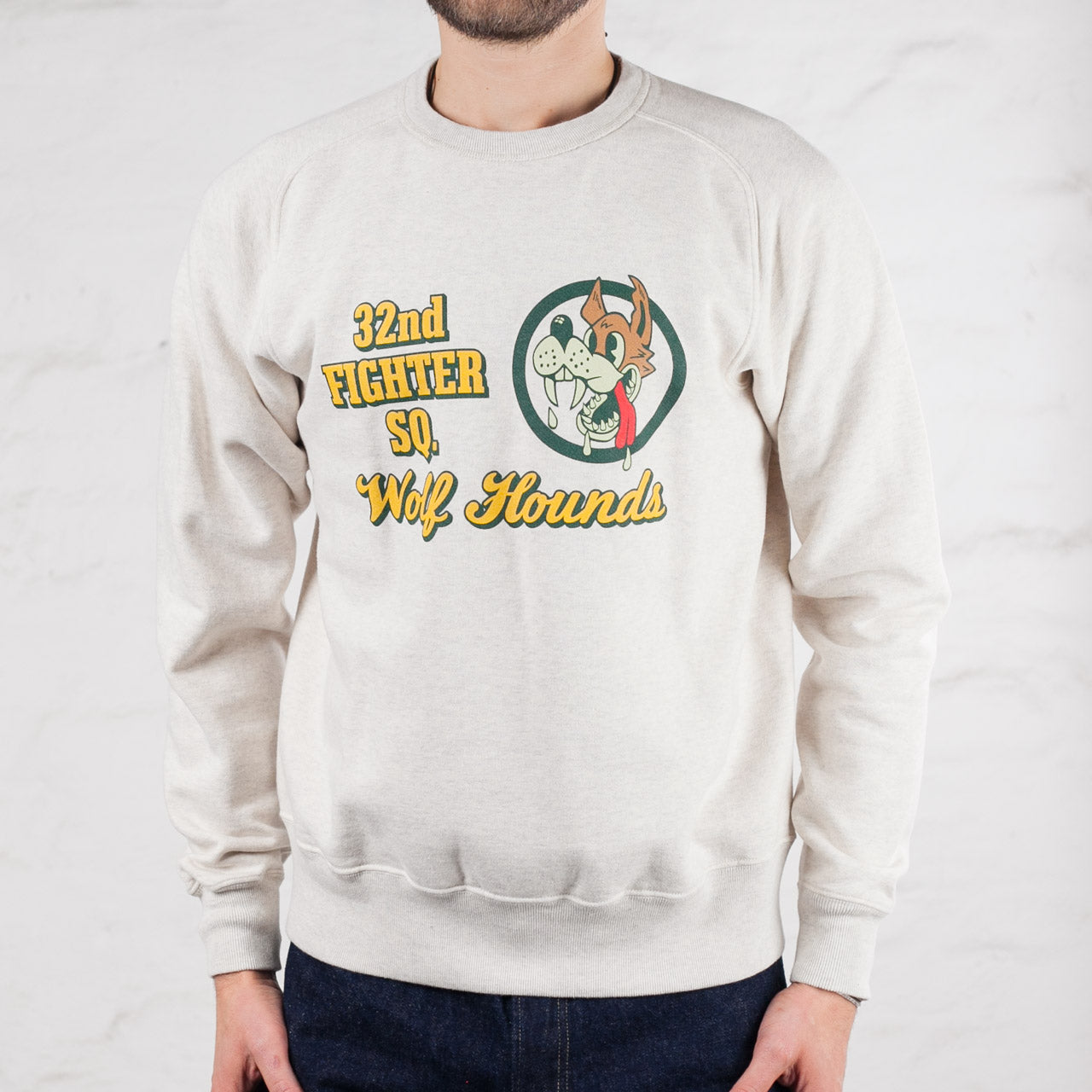
- Graphic Designs: These are not random, fashionable prints. Brands like Buzz Rickson's or The Real McCoy's use historical motifs. These are usually true-to-original emblems of US military units, American college sports teams from the 1940s, or authentic company logos. Printing is often done using the pigment print or discharge method. These colors penetrate deep into the fibers, instead of sitting on top as a thick layer like plastisol prints. Over the years and many washes, these graphics fade in harmony with the fabric, giving the garment a beautiful, individual patina.
The Different Product Types in Detail
The range is divided into various historical cuts, each optimized for specific purposes. Every detail of these garments has a historical or functional origin.
Crewneck Sweatshirts (The Classic Crewneck)
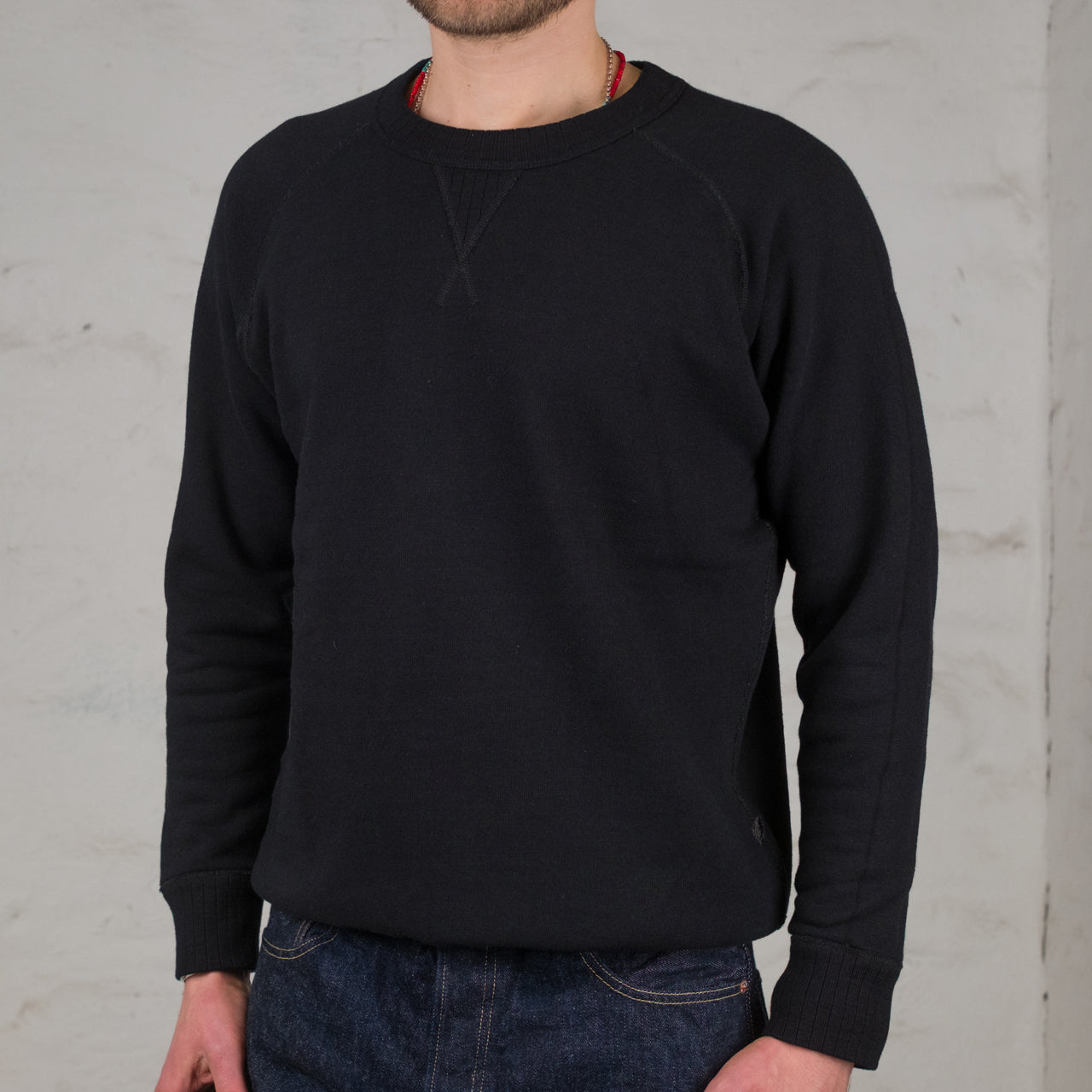
The classic crewneck is the purest original form of the sweatshirt. High-quality versions are characterized by the distinctive collar insert, known as the V-gusset (or also Freedom Sleeve constructions). In authentic reproductions, this elastic ribbed knit triangle can be found either only on the front (single V) or on both the front and back of the collar (double V).
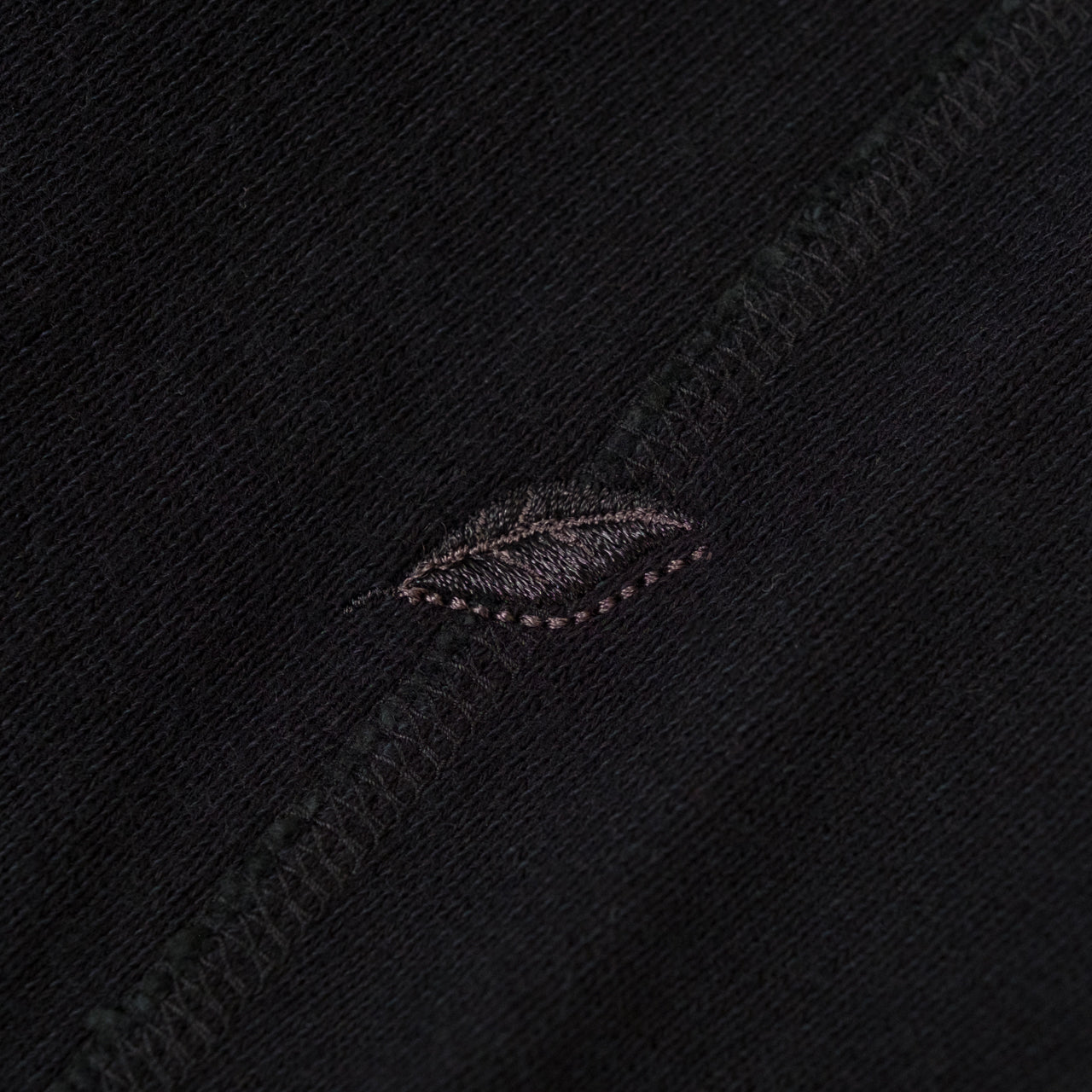
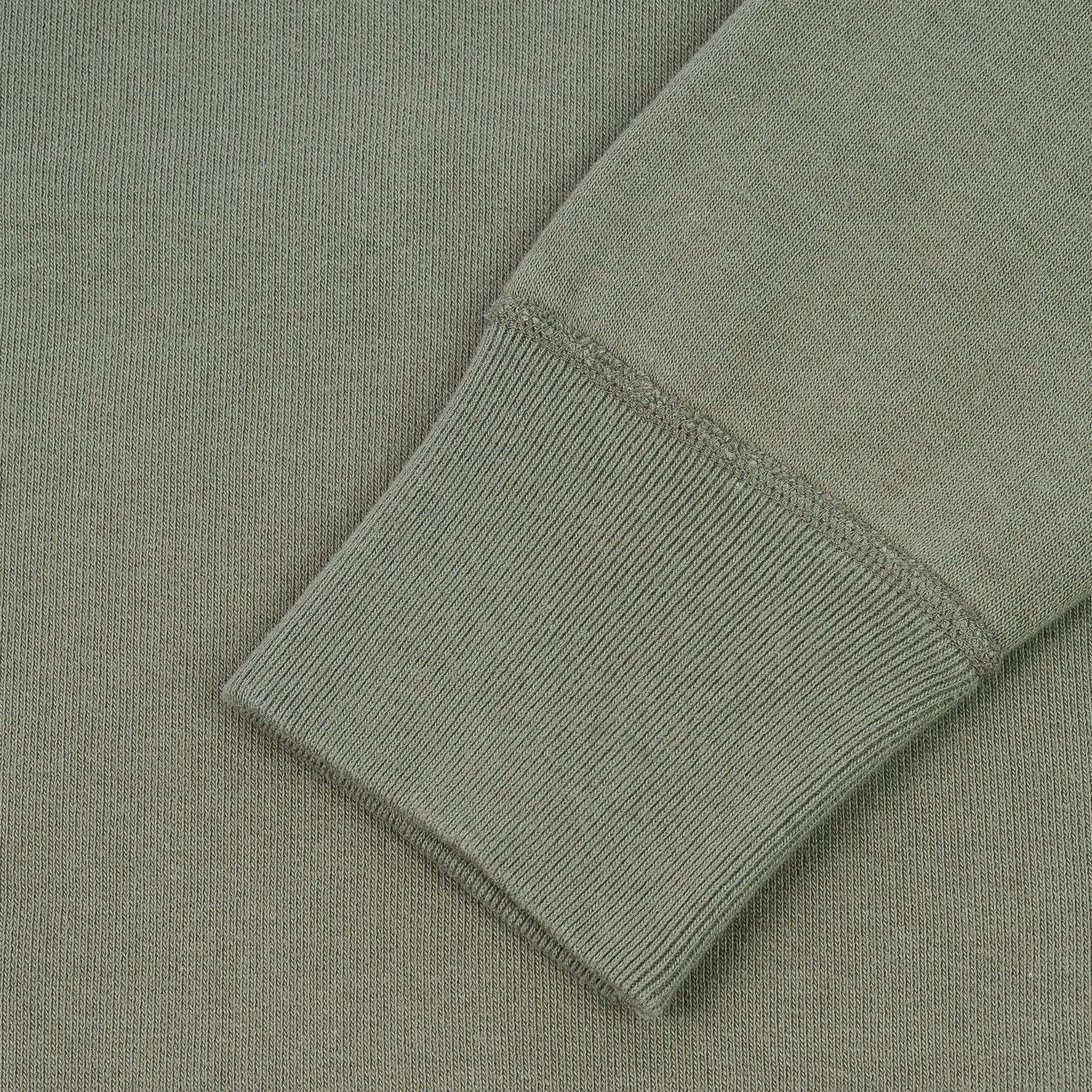
These sections are held in place by extremely flat, robust flatlock seams. These four-needle seams lie absolutely flat on the skin to prevent chafing. A relic from the time when these sweaters were worn directly during tough football training. The wide, elastic ribbed cuffs on the sleeves and hem ensure that the sweater fits snugly at the wrists and hips, preventing cold air from entering.
Hoodies
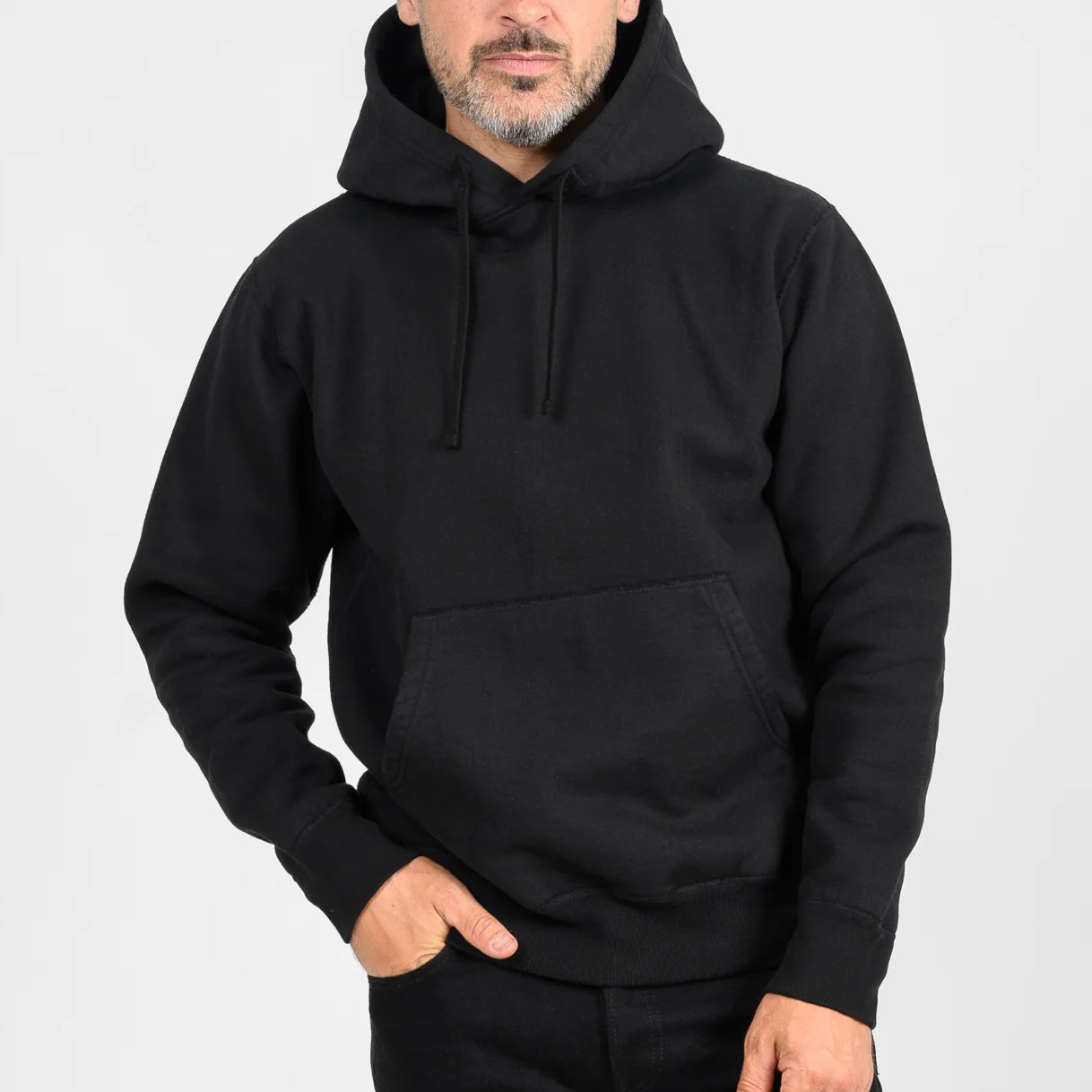
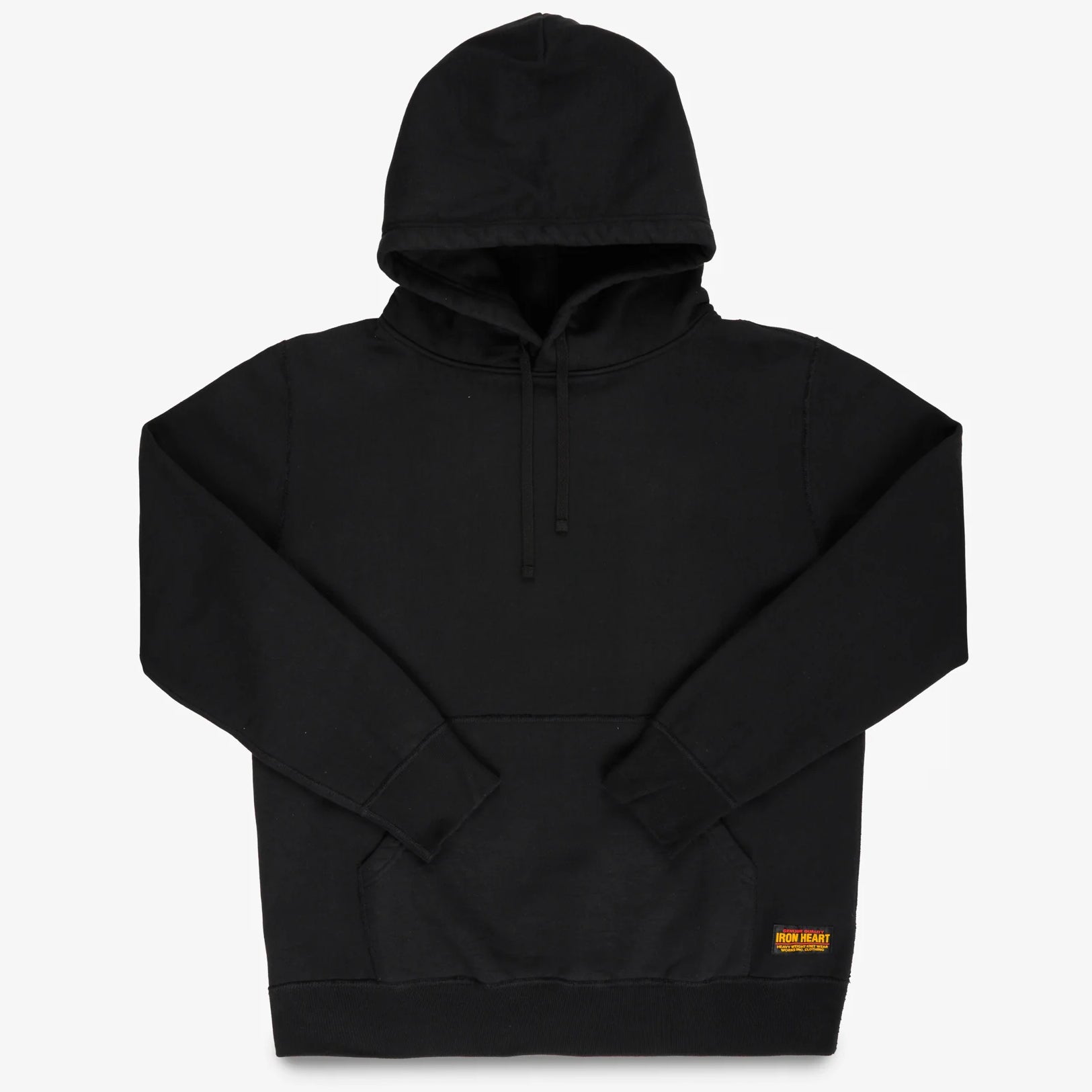
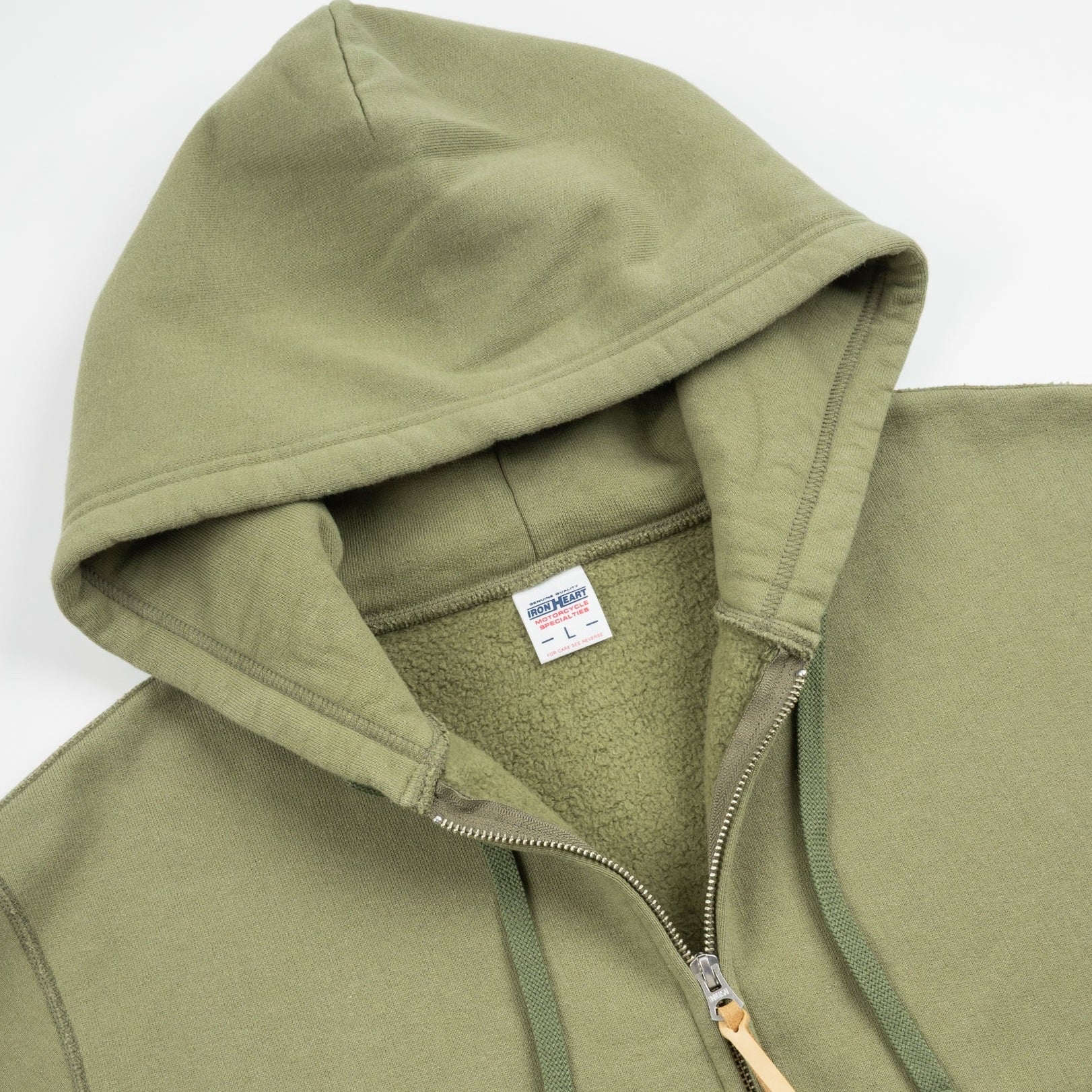
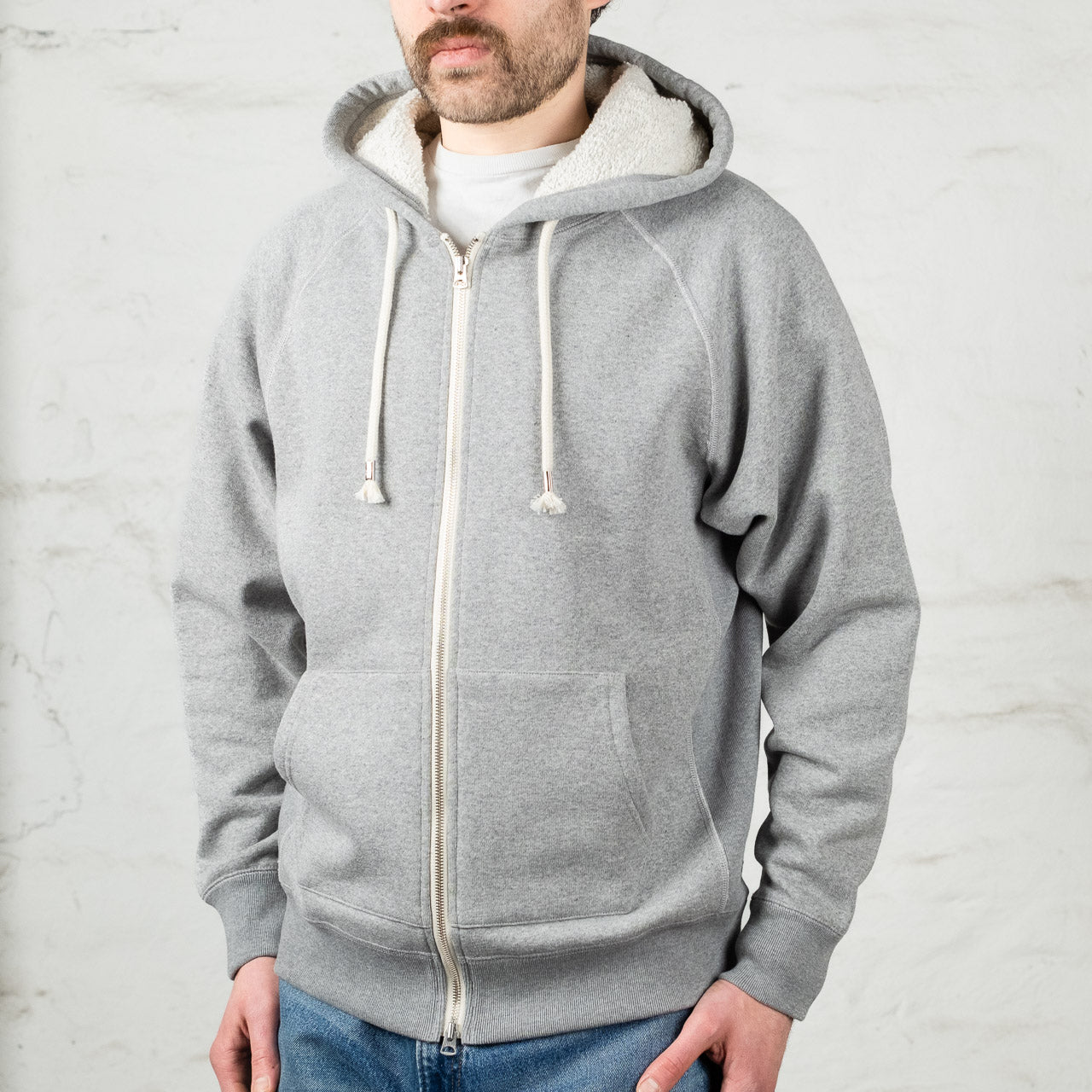
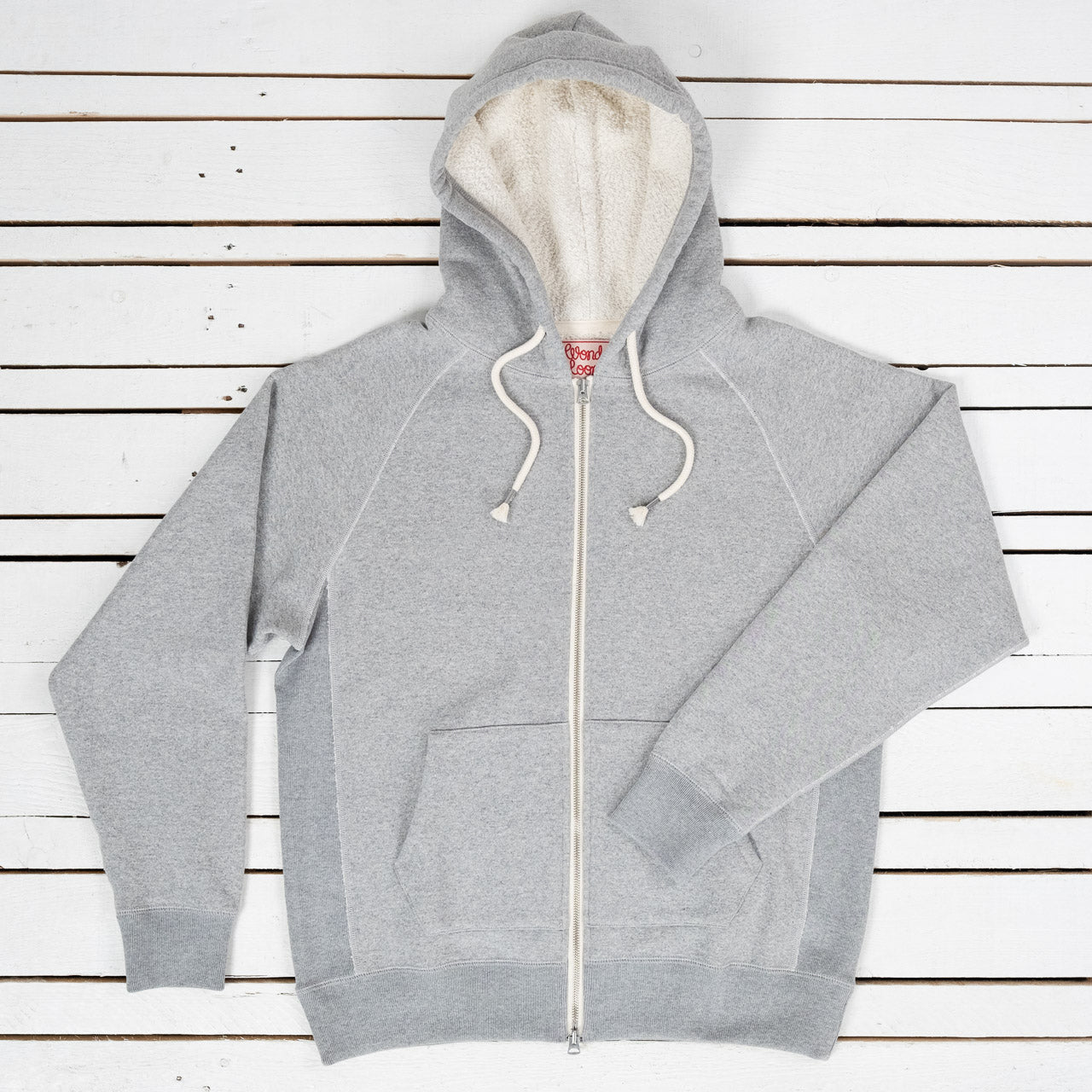
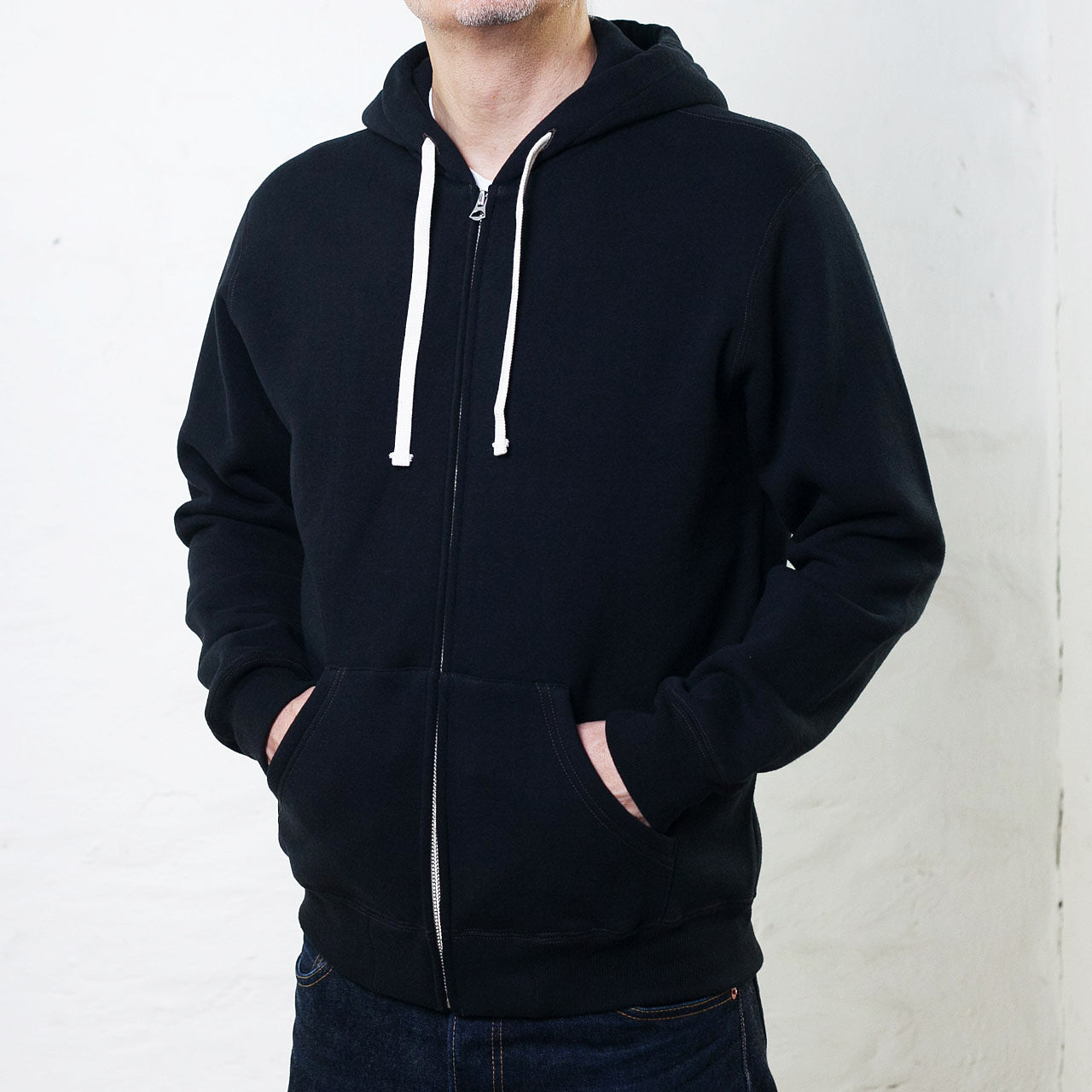
A first-class hoodie is primarily defined by its hood. Cheap hoodies often have flimsy, single-layer hoods that collapse flat on the shoulders. Brands like Iron Heart, The Real McCoy’s, or Jackman construct double-layer, dimensionally stable hoods. Even when the hoodie is worn open, the hood stands neatly upright and frames the face.
The inside of these hoodies is usually made of brushed fleece. In this process, the cotton loops on the inside are roughened in an elaborate mechanical procedure. This breaks open the fibers, makes the material cuddly soft, and drastically increases thermal insulation by trapping more air in the fabric.
The variant with a continuous zipper offers maximum flexibility in everyday life. This is where the wheat is separated from the chaff, especially when it comes to haberdashery. High-end manufacturers exclusively use robust metal zippers, often original replicas of historical zipper systems such as Talon, Universal, or Waldes. These zippers are often a bit stiff when new but break in perfectly over time and outlast the entire lifespan of the textile without tooth loss. The pocket constructions (mostly designed as split kangaroo pockets) are reinforced at stress points with bar tack stitches to prevent tearing.

FAQ: Your Most Important Questions About Sweatshirts Answered
What does 25.8oz mean for a sweatshirt or hoodie?
The ounce (oz) specification refers to the weight of the fabric per square yard. A value of 25.8oz indicates an extreme ultra-heavyweight fabric. It is more than twice as heavy as conventional premium sweatshirts and is characterized by maximum material density, extreme durability, windproofness, and a stiff, distinctive feel.
Why are high-quality sweatshirts made without side seams (tubular knit)?
The seamless construction is created on historical circular knitting machines. Since the body consists of a continuous tube of fabric, there are no side seams that are under uneven tension. This effectively prevents the sweatshirt from twisting after washing. In addition, it increases wearing comfort, as no internal seams can rub against the flanks.
What is the function of the V-gusset on the collar of crewneck sweatshirts?
The elastic ribbed knit triangle below the collar (V-gusset) originally had two functions: Firstly, it made it easier to put on and take off the sweater, as the collar became more stretchable. Secondly, it served as a sweat catcher during sports activities to prevent the neckline from sagging and to absorb moisture. Today, it is the ultimate quality feature of classic heritage sportswear.
How to style heavyweight sweatshirts in an authentic heritage look?
Due to their stiffness and weight, these sweaters require equally robust partners. A massive 25.8oz hoodie works perfectly under a sturdy horsehide jacket (like a classic flight jacket or a rider jacket) or over a heavy shirt that peeks out slightly at the hem. For the lower body: Light chinos will be overshadowed here. The ideal base is a stiff, unwashed raw denim jeans made from Japanese selvedge denim, which provides a strong counterpoint to the substantial top.
Why do Japanese loopwheel textiles permanently retain their shape?
Because loopwheel fabrics are knitted extremely slowly on historic machines and completely without mechanical tension, the cotton fibres retain their natural elasticity. The fabric itself is extremely relaxed. If the sweater is stretched, the material will always spring back to its original fit due to this inherent flexibility of the structure, instead of stretching out.
What should be considered when caring for heavy cotton sweatshirts?
Heavy cotton sweaters should always be washed at a maximum of 30 degrees on a delicate cycle, preferably turned inside out to protect the surface. Fabric softener must be avoided, as it weakens the cotton fibers and impairs dimensional stability. Due to their enormous weight when wet, heavyweight sweaters should never be dried on a hanger, but rather laid flat on a towel to prevent vertical distortion. Tumble drying is strictly forbidden.
